VISUAL INTELLIGENCE LABORATORY · ILLINOIS TECH

Building intelligent systems that see, understand, and act.

VIL advances computer vision and deep learning for visual perception, multimodal 3D understanding, autonomous systems, and efficient image/video intelligence.

15featured projects
7funded initiatives
3core research areas
What we work on

Research Areas

Our work connects visual perception, efficient learning, video intelligence, and 3D scene understanding for real-world systems.

01

Open-World Visual Recognition and Learning

  • Open-vocabulary image recognition and semantic segmentation.
  • Long-tailed and imbalanced visual recognition.
  • Robust and efficient deep learning for image classification.
  • Vision-language models for open-world visual understanding.
02

3D and Multimodal Visual Perception

  • 3D object detection and semantic segmentation.
  • Multimodal perception using camera, LiDAR, and other sensing modalities.
  • Vision-language fusion for 3D scene understanding.
  • Multi-sensor feature fusion for autonomous systems and robotics.
03

Generative AI and Visual Intelligence

  • Diffusion models for image generation and visual representation learning.
  • Generative models for data augmentation and long-tailed learning.
  • Multimodal generative models for image and scene understanding.
  • Foundation models and prompt-based learning for computer vision.
Selected work

Research Projects

Recent research spans real-time semantic segmentation, universal image segmentation, multimodal 3D detection, and video object detection.

EMSFormer: Efficient Multi-Scale Transformer for Real-Time Semantic Segmentation
Open-vocabulary Semantic SegmentationProject 01

CGSeg: Cross-Aggregation and Gated Fusion for Open-Vocabulary Semantic Segmentation

CGSeg is a one-stage framework for open-vocabulary semantic segmentation that leverages pretrained vision-language models to segment arbitrary categories specified by text prompts. It introduces a gated fusion module to adaptively refine image and text features before constructing the cost volume, and a cross-aggregation module to enhance interactions between spatial and class representations. These designs improve image-text alignment and segmentation accuracy without relying on complex decoders. CGSeg achieves strong performance on standard benchmarks including ADE20K, Pascal Context, and Pascal VOC.

DynaFusion: Dynamic Feature Fusion for Multimodal 3D Semantic Segmentation
3D PerceptionProject 02

DynaFusion: Dynamic Feature Fusion for Multimodal 3D Semantic Segmentation

DynaFusion is a difficulty-aware multimodal framework for 3D semantic segmentation that fuses LiDAR and RGB information for autonomous driving. It selectively refines challenging and uncertain points using saliency-guided fusion, deformable attention, and local context modeling, allowing computation to focus on the most informative regions. This design improves segmentation accuracy while maintaining an efficient accuracy–latency trade-off.

EMSFormer: Efficient Multi-Scale Transformer for Real-Time Semantic Segmentation
Real-Time Semantic SegmentationProject 03

EMSFormer: Efficient Multi-Scale Transformer for Real-Time Semantic Segmentation

EMSFormer is an efficient Transformer-based framework designed for real-time semantic segmentation. It introduces multi-scale single-head attention to capture rich contextual information with lower computational cost, and cross-resolution single-head attention to efficiently fuse global and high-resolution features. With its dual-resolution architecture, EMSFormer achieves a strong balance between segmentation accuracy and inference speed on ADE20K, Cityscapes, and CamVid.

Efficient Multi-Task Training with Adaptive Feature Alignment for Universal Image Segmentation
Universal Image SegmentationProject 04

Efficient Multi-Task Training with Adaptive Feature Alignment for Universal Image Segmentation

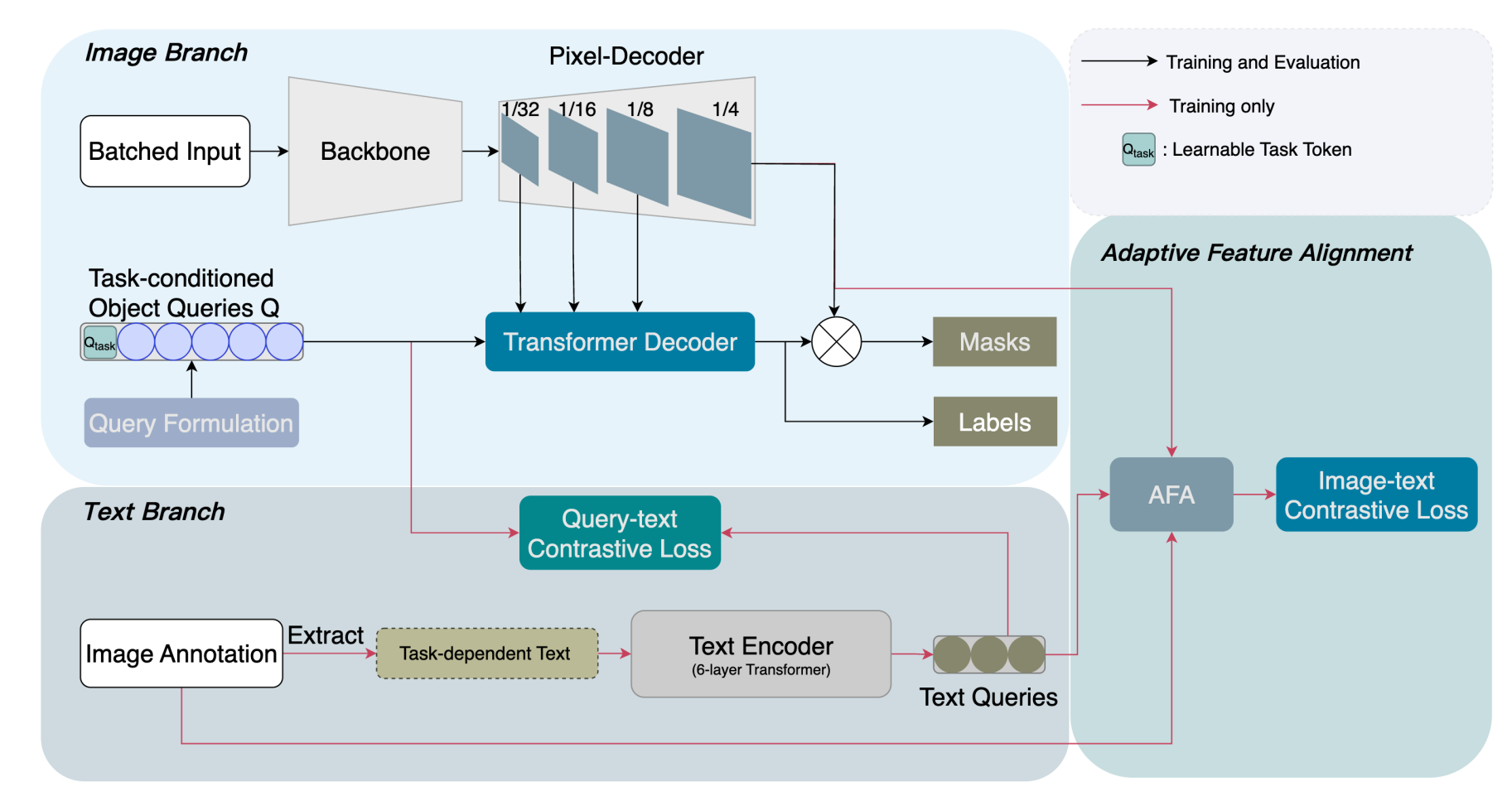
AFA is a lightweight framework for universal image segmentation that supports multiple segmentation tasks within a unified model. It introduces a learnable task token to adaptively capture task-specific characteristics and an adaptive feature alignment module to efficiently bridge visual and textual representations. This design improves multi-task segmentation performance without relying on large modality encoders or costly alignment strategies, making it well suited for efficient and resource-constrained applications.

BEVFusion With Dual Hard Instance Probing for Multimodal 3D Object Detection
3D PerceptionProject 05

BEVFusion With Dual Hard Instance Probing for Multimodal 3D Object Detection

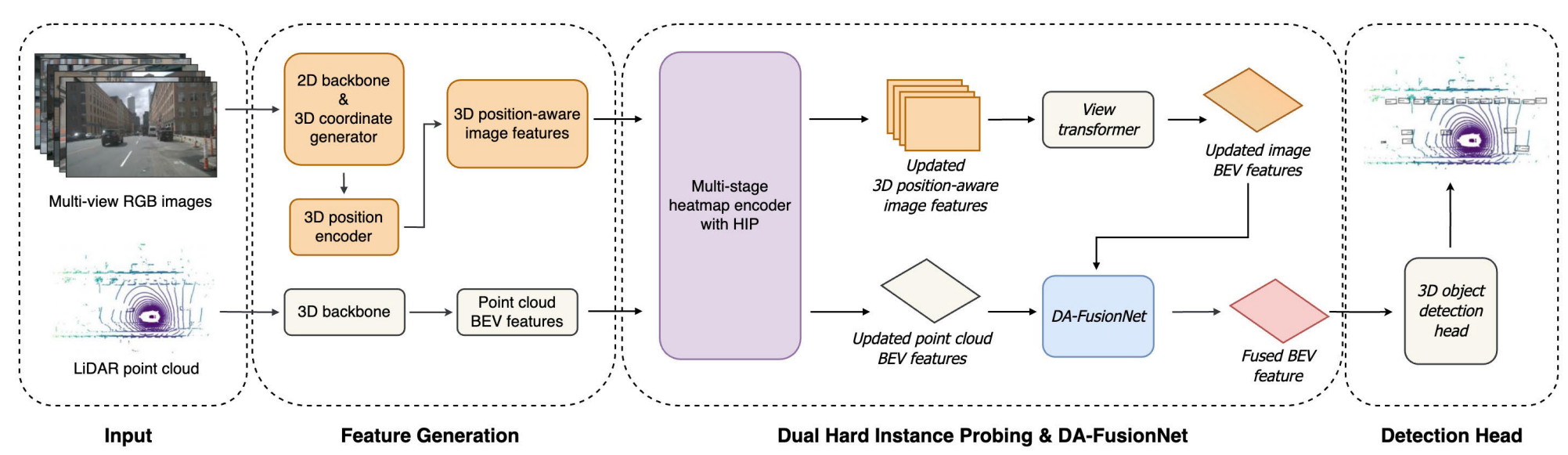
BEVFusion-DHIP is a multimodal 3D object detection framework designed to reduce false negatives in autonomous driving, particularly for small, distant, and occluded objects. It introduces dual hard instance probing to progressively refine challenging objects in both LiDAR and image features, together with a deformable attention fusion network to improve spatial alignment and interaction between modalities. The framework achieves strong performance on the nuScenes benchmark, improving both detection accuracy and robustness over the BEVFusion baseline.

Enhancing query formulation for universal image segmentation
Universal Image Semantic SegmentationProject 06

Enhancing query formulation for universal image segmentation

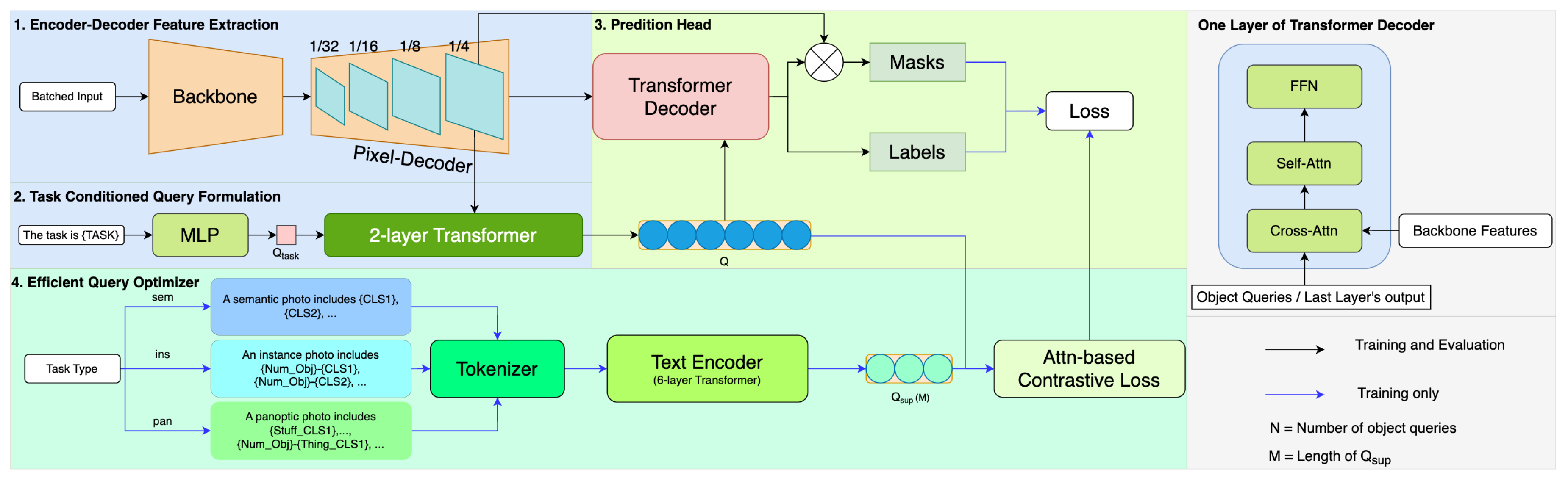
EQO is an efficient multimodal framework for universal image segmentation that supports semantic, instance, and panoptic segmentation within a unified architecture. It simplifies text-based query optimization by encoding inter-class and inter-task information into a compact textual representation, while introducing an attention-based contrastive loss to improve query learning through one-to-many matching. This design reduces computational complexity while achieving strong performance across multiple segmentation tasks on ADE20K.

Enhancing Semantically Masked Transformer with Local Attention for Semantic Segmentation
Semantic SegmentationProject 07

Enhancing Semantically Masked Transformer with Local Attention for Semantic Segmentation

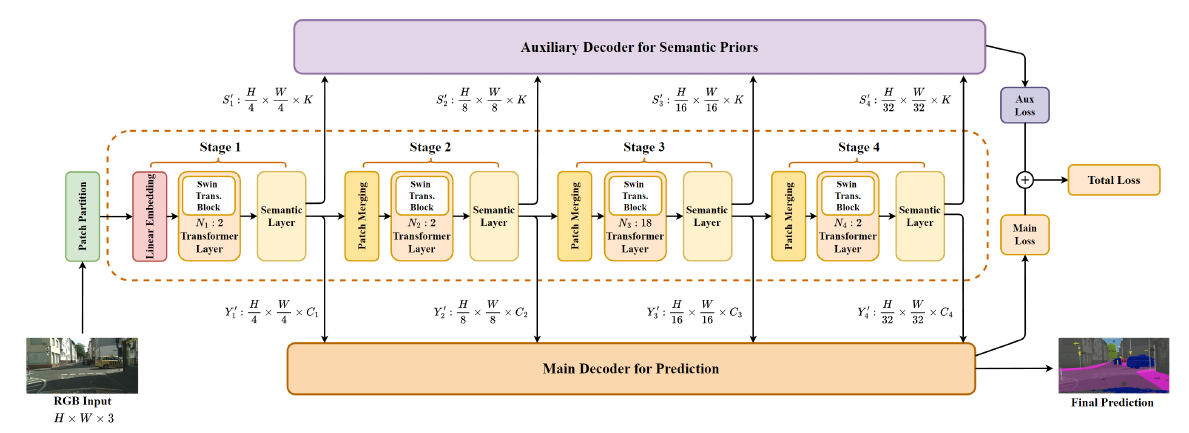
This project introduces a lightweight semantic layer for Transformer-based semantic segmentation to better capture local details and semantic context during feature encoding. The proposed module uses multi-scale depthwise convolutions and is integrated into different stages of a hierarchical Transformer backbone, improving the representation of fine-grained structures and small objects. It can be combined with common segmentation frameworks such as Semantic-FPN and Mask Transformers, achieving strong performance on ADE20K and Cityscapes.

Voxel Transformer with Density-Aware Deformable Attention for 3D Object Detection
3D PerceptionProject 08

Voxel Transformer with Density-Aware Deformable Attention for 3D Object Detection

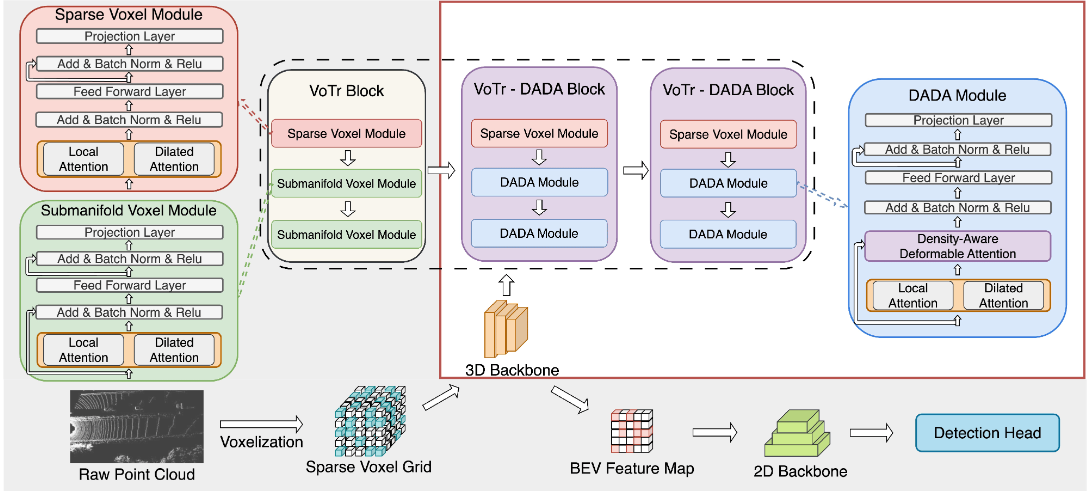
VoTr-DADA is a Transformer-based 3D object detection framework that enhances voxel feature learning with density-aware deformable attention. Instead of relying on a predefined receptive field, the proposed DADA module uses voxel density information to identify important regions and adaptively sample informative features. This design provides more flexible long-range modeling while maintaining efficient inference, achieving improved detection performance on the KITTI and Waymo Open datasets.

Enhancing mask Transformer with auxiliary convolution layers for semantic segmentation
Semantic SegmentationProject 09

Enhancing mask Transformer with auxiliary convolution layers for semantic segmentation

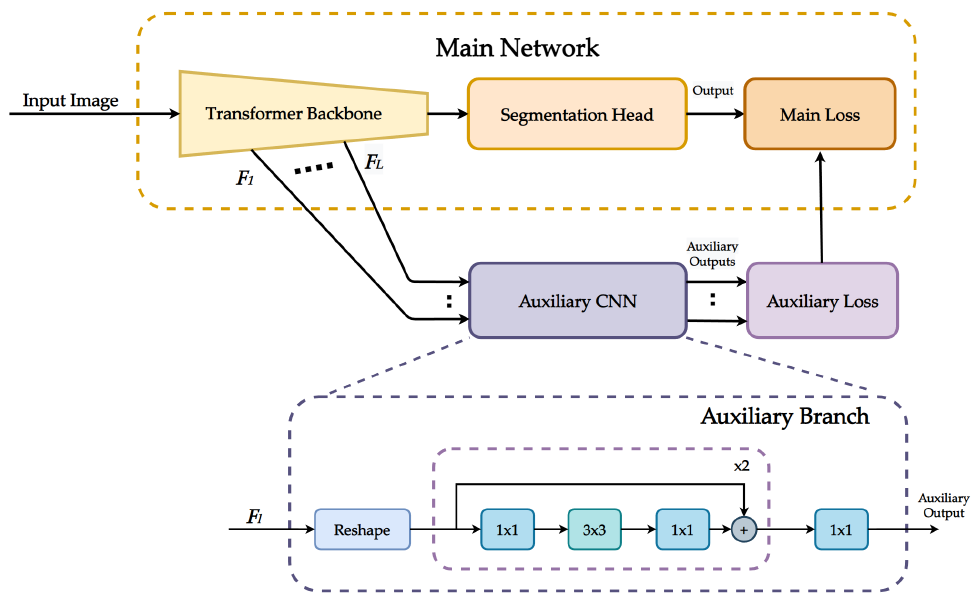
This project enhances Mask2Former with auxiliary convolutional branches to improve local feature learning and small-object segmentation. During training, the auxiliary branches capture dense local details that complement the global representations learned by Transformers. Since these branches are removed during inference, the model gains improved segmentation accuracy without introducing additional inference cost. The proposed approach achieves strong performance on ADE20K and Cityscapes.

Video object detection using event-aware convolutional LSTM and object relation networks
Object DetectionProject 10

Video object detection using event-aware convolutional LSTM and object relation networks

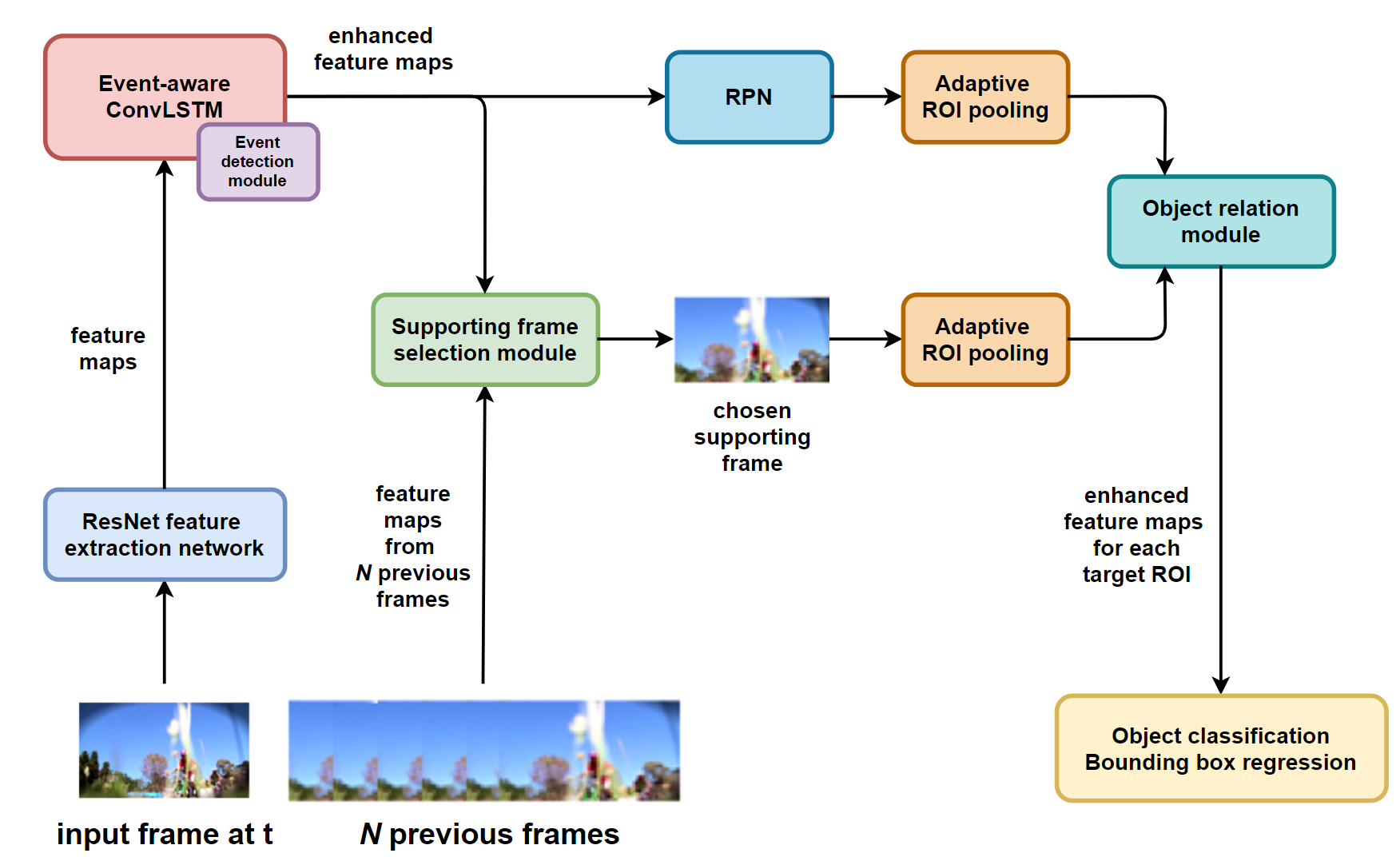
This project develops an event-aware video object detection framework for challenging conditions such as occlusion, large motion, and aspect-ratio changes. It combines an event-aware ConvLSTM to highlight difficult temporal events with an object relation module that selectively aggregates useful features from reference frames. By exploiting temporal context more effectively, the framework improves object detection robustness in complex video scenarios.

Object detection with location-aware deformable convolution and backward attention filtering
Object DetectionProject 11

Object detection with location-aware deformable convolution and backward attention filtering

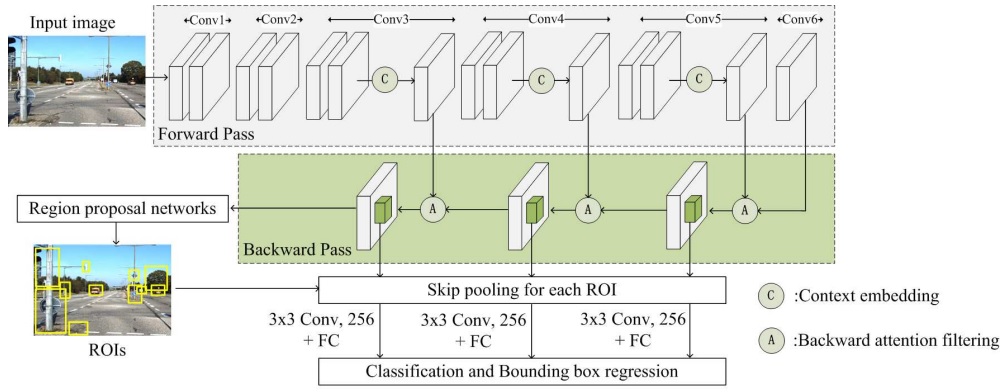
This project develops an efficient object detection framework for autonomous driving with a focus on multi-class and multi-scale objects in complex street scenes. It introduces location-aware deformable convolution to adaptively capture informative contextual features and backward attention filtering to enhance useful high-resolution features while suppressing distracting low-level information. The proposed approach improves detection accuracy across varying object scales while maintaining fast inference.

Modeling long- and short-term temporal context for video object detection
Video Object DetectionProject 12

Modeling long- and short-term temporal context for video object detection

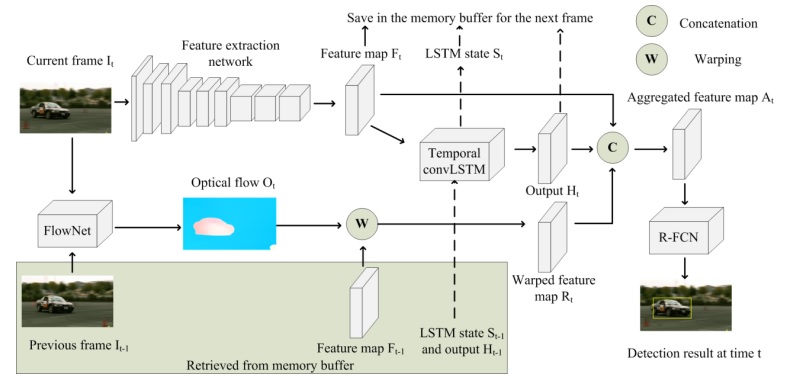
This project develops a causal online video object detection framework that uses only the current frame and preceding frames, making it suitable for real-time applications. It combines optical-flow-based feature warping for short-term temporal context with a temporal ConvLSTM for long-term feature propagation. By integrating both short- and long-term temporal information, the framework achieves accurate and efficient video object detection without relying on future frames.

Improving object detection using weakly-annotated multi-label segmentation
Semantic SegmentationProject 13

Improving object detection using weakly-annotated multi-label segmentation

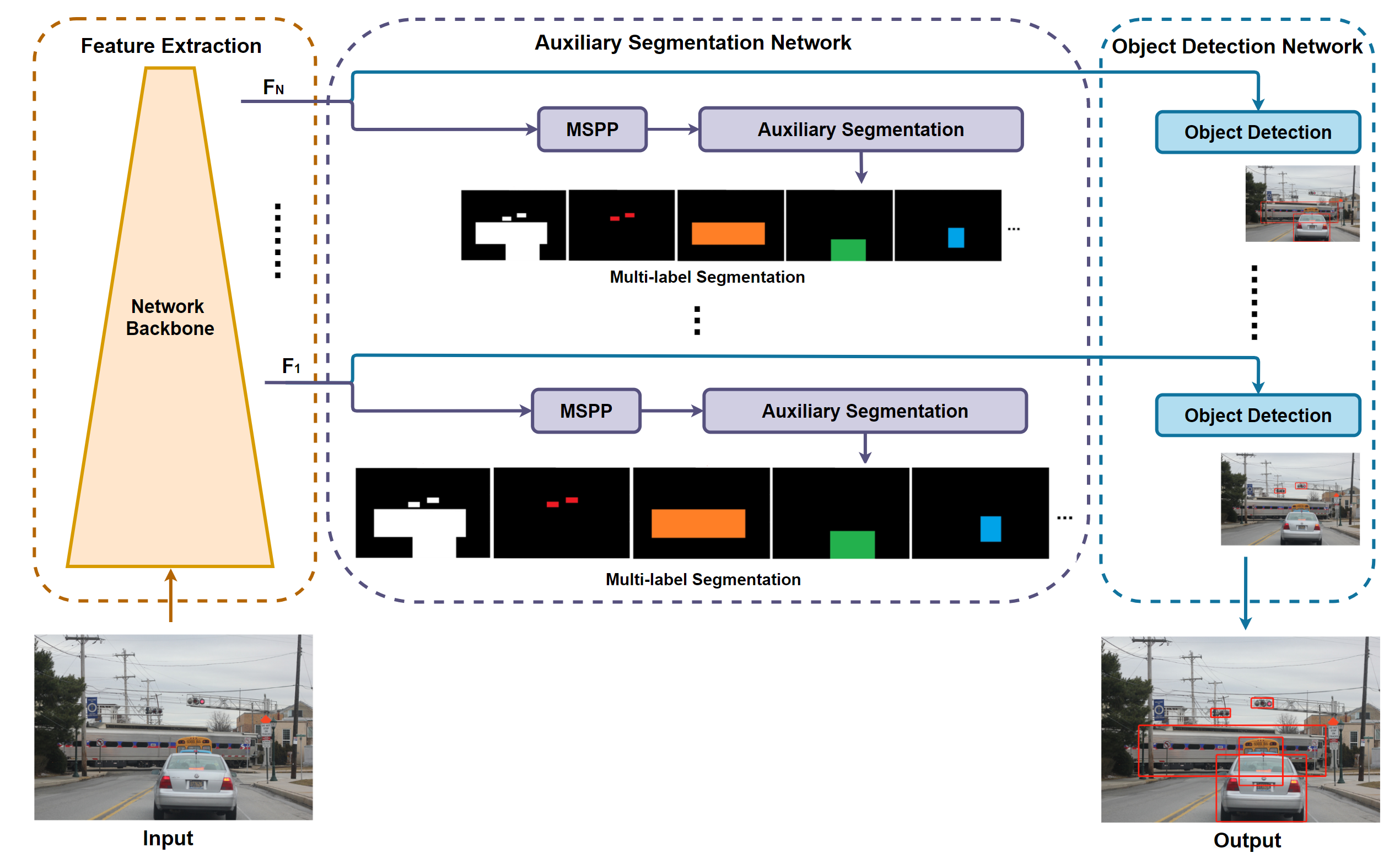
This project improves one-stage object detection by introducing a weakly supervised auxiliary multi-label segmentation branch during training. The auxiliary task helps the detector learn richer spatial and semantic information, particularly for handling occluded objects, without requiring expensive pixel-level annotations. Since the segmentation branch is removed during inference, the method improves detection accuracy without adding computational cost and can be integrated with popular detectors such as RetinaNet, YOLO, and SSD.

Video object detection with two-path convolutional LSTM pyramid
Video Object DetectionProject 14

Video object detection with two-path convolutional LSTM pyramid

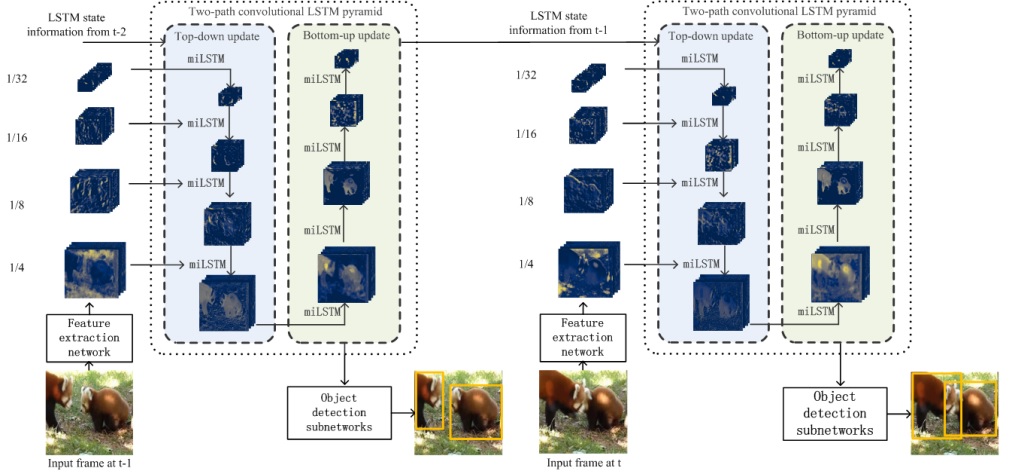
This project develops a two-path ConvLSTM pyramid network to improve video object detection under drastic object scale changes caused by camera motion. The framework propagates temporal context through both top-down and bottom-up pathways, allowing information to flow across multiple feature scales over time. By combining multi-scale temporal modeling with feature pyramids, the method improves robustness to changing object sizes and can be integrated with various still-image object detectors.

Mixed spatial pyramid pooling for semantic segmentation
Semantic SegmentationProject 15

Mixed spatial pyramid pooling for semantic segmentation

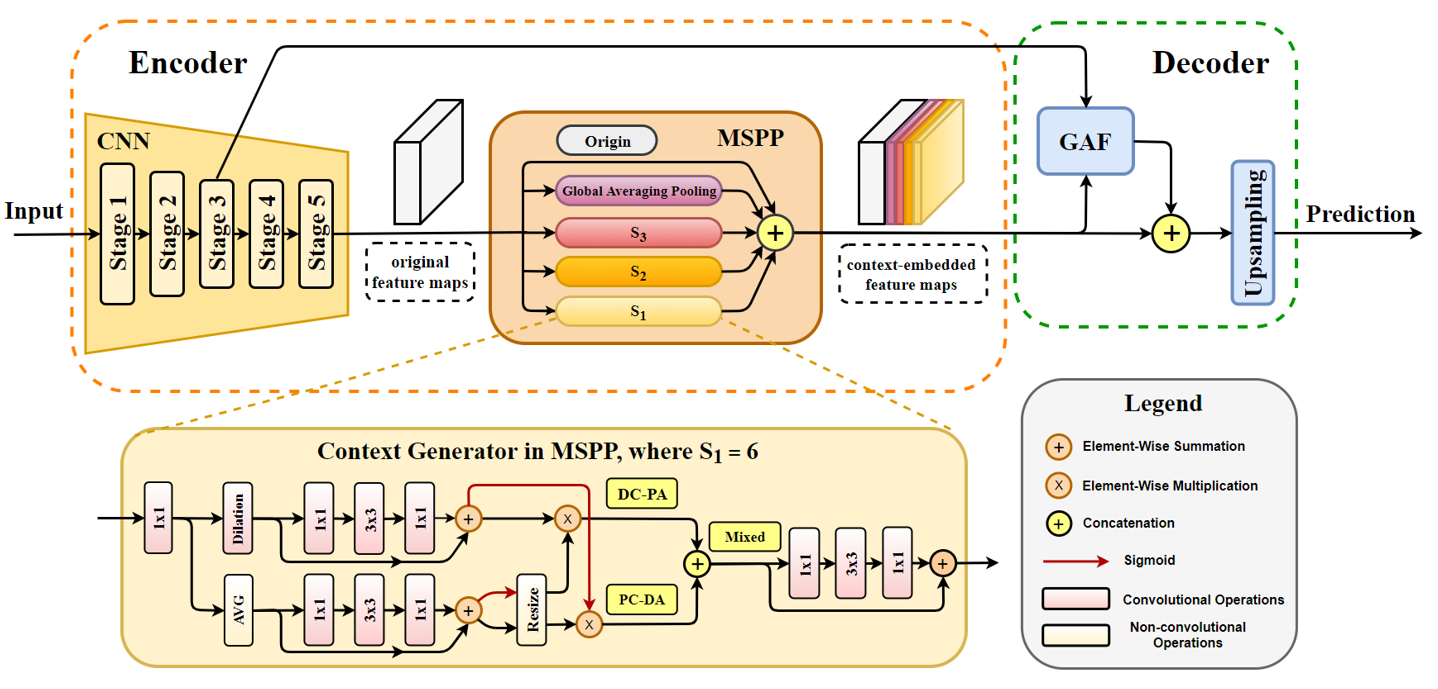
This project develops a semantic segmentation framework that combines multi-scale contextual modeling with attention-guided feature fusion. It introduces a Mixed Spatial Pyramid Pooling (MSPP) module to capture dense contextual information at multiple scales and a Global-Attention Fusion (GAF) module to refine low-level features using global semantic guidance. The framework improves object detail recovery and segmentation accuracy while maintaining a simple and effective architecture.

Research support

Research Funding

VIL collaborates with research institutes and industry partners on visual intelligence, autonomous driving, video systems, and embedded AI.

  1. 2024-2028
    HL Mando

    Development of an embedded AI model for road surface condition analysis

    Total budget: $1,625,700

  2. 2022-2026
    Korea Electronics Technology Institute (KETI)

    Software and hardware development of cooperative autonomous driving control platform for commercial special and work-assist vehicles

  3. 2017-2021
    Korea Electronics Technology Institute (KETI)

    Camera-based artificial intelligence system for autonomous cars

  4. 2012-2017
    Argonne National Laboratory

    Enhancement of 3D model reconstruction technology,

  5. 2012-2017
    Korea Electronics Technology Institute (KETI)

    Stereo-based pedestrian detection and tracking algorithms for advanced driver assistant systems,

  6. 2012-2014
    Memsoft

    Power-optimized distributed video codec design for wireless video sensor networks,

  7. 2011-2012
    Korea Electronics Technology Institute (KETI)

    Hardware/software co-design of low-complexity video coding algorithms for wireless video surveillance,

Research archive

Past Research Projects

Earlier work established a foundation in 3D reconstruction, video coding, wireless multimedia, and robust visual communication.

Deep learning based object detection for autonomous driving

Based on the popular two-stage detector (Faster R-CNN) and one-stage detector (SSD), our research focuses on improving the detection accuracy and the processing speed using spatial and temporal context information. The spatial context information extraction is carried out using spatial recurrent neural network and location-aware deformable convolution. Short-term and long-term temporal context information is modeled by optical flow and convolutional LSTM.

Stereo-based pedestrian detection

Our research speeds up the detection process by utilizing stereo camera and depth information to detect the ground plane where pedestrians would normally stand upon. Thus, the ROI search range is greatly reduced, and the detection can be performed at real-time speed. Our research also features depth map estimation (stereo matching) based on modified Census transform and mutual information which is fast and robust against the brightness inconsistency in the outdoor environment. The pedestrian detection system is implemented on the low-profile mini-PC and tested in the Chicago urban area.

Real-time 3D reconstruction using RGB-D

3D reconstruction like KinectFusion has been a well-established area of study in the field of robotics and computer vision. The objective is to recreate a real-world scene, and it has applications in areas like augmented reality (AR), robotic teleoperation, medical analysis, video games, etc. We focus on improving the performance of 3D reconstruction for challenging tasks such as moving object segmentation, tracking fast camera motion, modeling complex environments, etc.

Distributed video coding (DVC)

DVC is commonly referred to as the reverse paradigm of conventional video coding where the complexity is transferred from the encoder to the decoder. The target applications are video surveillance cameras, video conferencing and remote video sensors which need to perform video encoding on resource constrained devices.

Multiple description coding in DVC

Multiple description coding in DVC is a an effort to reduce the effects of channel losses in DVC By intentionally introducing redundancy into the encoded bitstreams, the ability of the codec to withstand channel losses are increased.

Multiview video coding

Multiview video coding (MVC) is a hot research topic these owing to the advances in processing power and algorithms to process multiview video content. The lab focuses on all aspects of MVC starting from Depth extraction from a pair of stereoscopic images. Multiview video coding focusing on compression of depth maps, layered depth images and layered depth videos. View synthesis at arbitrary camera locations using concepts of depth image based rendering.

Video anomaly detection

Anomaly detection in video is a very important topic that the lab is conducting research into. Using concepts from machine learning, pattern recognition and stochastic processes, research is being conducted to extract useful features from video. Such research will be very useful to law enforcement authorities for automatic detection of anomalies in surveillance cameras distributed around a city.

Network-aware and error-resilient video coding

Research is being conducted into improvement of H.264/AVC, joint source-channel coding, rate control and error control, error concealment, video distortion estimation and quality assessment.

Wireless multimedia communication

Quality of Service provision for video transmission in wireless networks, multi-path transport over wireless ad-hoc networks, multimedia transport protocols.

Cross-layer design for video transmission over wireless ad-hoc networks

Application-layer techniques for adaptive video transmission over wireless networks, adaptive cross-layer error protection, adaptive link-layer techniques, power-distortion optimized routing and scheduling.

Collaborate with VIL

Interested in visual intelligence research?

For research collaboration and student opportunities, contact Prof. Joohee Kim.

Contact the lab